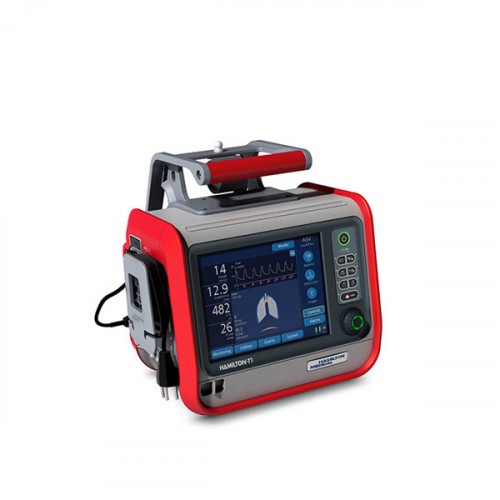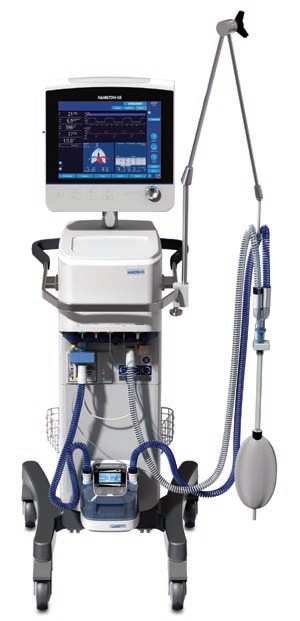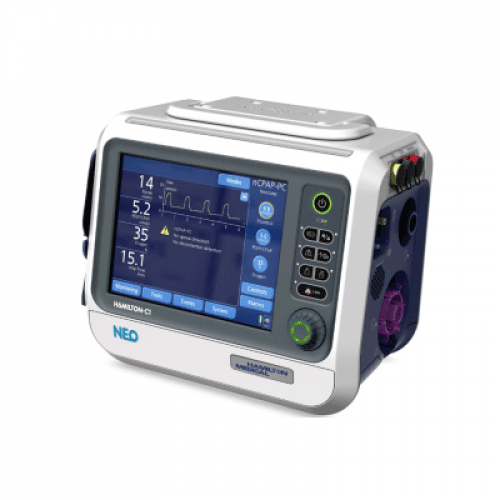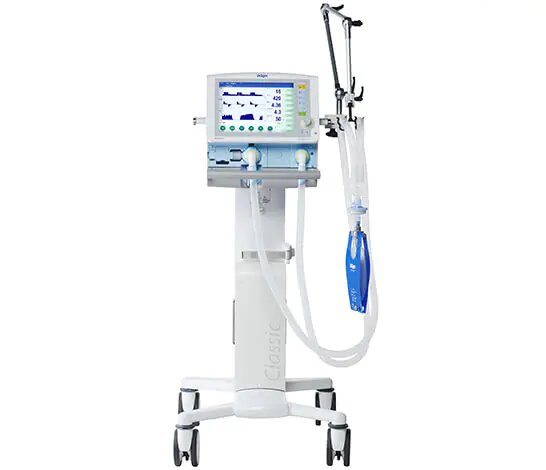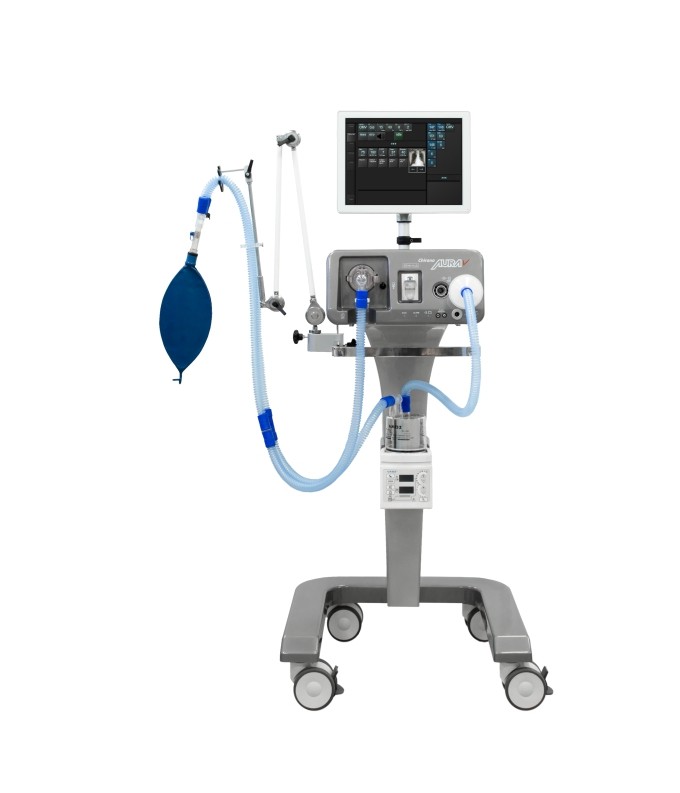
- Expert class ventilator. Equipped with a 15” color touch screen with the ability to rotate and change the viewing angle, as well as the possibility of mounting it separately from the device, a capnography module, an O2 sensor, a pneumatic nebulizer, a humidifier with automatic temperature control of the air mixture. The device is silent in operation. It is completed with a computer support module for lung ventilation and a medical compressed air compressor
- The device is intended for prolonged mechanical ventilation in adults, children and newborns, including those with extremely low body weight (from 500 g)
- Expert-class fan, which combines time-tested technological solutions and unique modern developments, makes the possibilities of the device almost limitless.
- Verified algorithms, based on extensive statistics and precise mathematical calculations, of the computer support module for ventilation, even in conditions of data deficiency, allow you to select the optimal mode for starting ventilation in a matter of moments, and inform the doctor about the patient’s condition throughout its entire duration and form recommendations for him.
- The Aura Pneumo ventilator has a technology that allows you to significantly expand the parameters of artificial lung ventilation. With a tidal volume of 5 ml and a respiratory rate of 180 per minute, this technique can be used even in preterm infants. But the implementation of only the minimum ventilation parameters in itself is not so unique. The possibility of full monitoring, both graphical and digital, during operation of the respirator with such ventilation parameters, makes the ventilator really high-tech and extremely safe for a small patient.
- The safety and efficiency of the process of artificial lung ventilation is the main task of ventilators. The most understandable way to achieve these goals is to create ventilation modes that meet these requirements. The main physiological parameter on which the satisfaction of the body’s needs for oxygen depends is minute ventilation of the lungs. APMV mode solves this problem. Regardless of the degree of the patient’s respiratory activity, its changes over time, the administration of drugs that affect the patient’s respiratory activity, the device maintains the value of this parameter at the level set by the doctor. Assessing the mechanical properties of the lungs, the device optimally regulates the respiratory rate and optimizes the value of the tidal volume/inspiratory pressure in order to create comfortable ventilation conditions for the patient.
- In case of critical damage to human lung tissue, it is necessary to create optimal conditions for each individual section of the lungs. The unique multi-level ventilation (MLV) mode can effectively help in solving this difficult task. The essence of the mode is reduced to the intermittent supply of different levels of inspiratory pressure for effective ventilation of various parts of the lungs with varying degrees of damage.
- One of the types of minimally invasive technologies for artificial lung ventilation is the CFS mode. Constant flow support can limit the use of invasive ventilation in patients with compromised hemodynamics and during the process of weaning a patient from mechanical ventilation.
- The combination of increased requirements for patient safety during artificial ventilation and automation of the ventilation process is provided by the Profilungs module. Based on the most accurate monitoring of all necessary ventilation parameters, including the mechanical properties of the patient’s lungs, the module allows automatic calculation of the optimal ventilation parameters for a particular patient in a given clinical situation. The module optimizes not only the settings of the ventilator, but also allows you to automate the process of weaning the patient from ventilation. In addition, the possibility of conducting a recruitment maneuver in automatic mode with the most detailed (graphic and digital) monitoring makes this process safer and more effective for the patient. The archiving of all set and measured values allows you to practically keep an electronic map of the process of artificial lung ventilation.
- Ventilators are equipped with LCD screens with the ability to perform advanced monitoring of the patient’s respiratory activity, as well as detailed monitoring of the mechanical properties of the lungs, such as:
- peak airway pressure
– mean airway pressure - inspiratory airway resistance
– peak alveolar and end expiratory alveolar pressure - static compliance of the lungs
- dynamic compliance of the lungs
– positive end-expiratory pressure and auto PEEP
– inspiratory and expiratory times, as well as time constants